
Small household repairs: DIY guide, 2026 tradesperson costs, tenant obligations, tax tips, and how to find a reliable craftsperson in your area.
Helpful Folks Redaktion
Home and trade experts
April 22, 2026
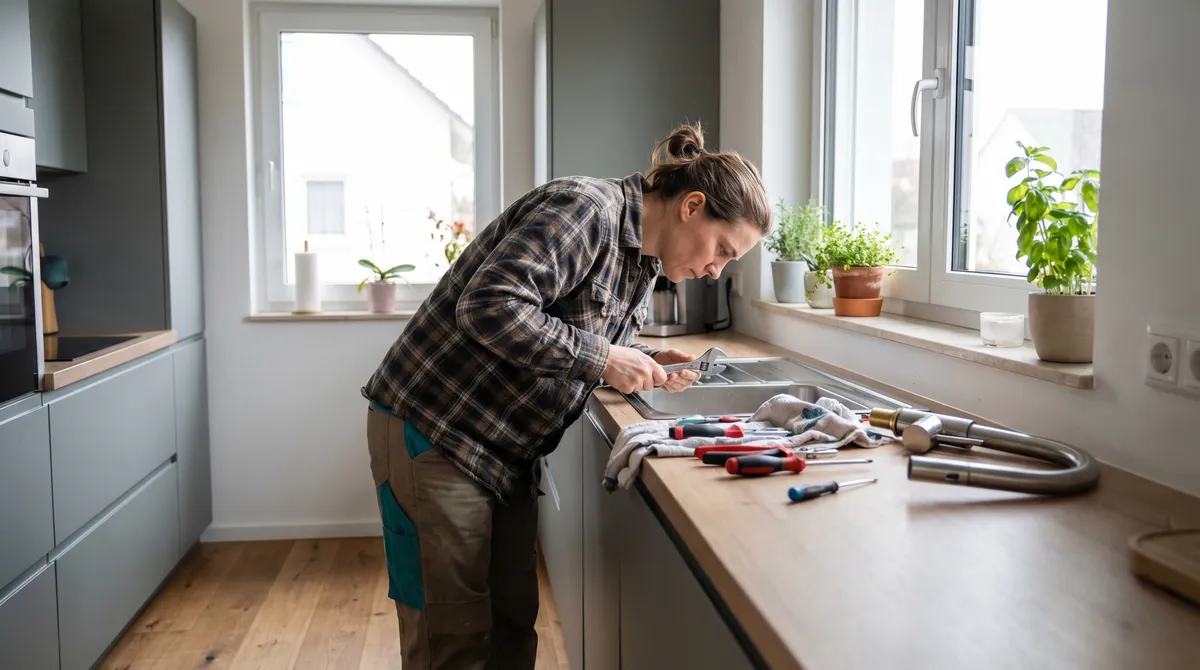
The faucet drips, the door squeaks, the blind is stuck — every household has these small nuisances that add up week after week. The question of whether to grab the screwdriver yourself or call a tradesperson often decides between lost hours of free time and surprise bills. This article shows you which repairs you can safely tackle yourself, where the professional is unavoidable, and how to calculate tradesperson costs properly — including the often overlooked tax benefits and tenant rights.
Almost every home knows the same classics: dripping faucets, wobbly door handles, burnt-out light fixtures, stuck window handles, leaky silicone joints in the bathroom. These everyday repairs quickly cost €80 to €150 per case when professionally handled — over ten years, a substantial four-figure sum.
Anyone handy with tools saves 30 to 50 percent through DIY. Tempting, but not universally advisable. Two hurdles are often underestimated: time and risk. The internet has taught us that anyone can do anything if they just watch a YouTube tutorial. Reality looks different.
A sober fact check: up to 300,000 DIY accidents happen in Germany each year. Particularly dangerous are electrical, gas and water works, where laypeople consistently underestimate what can go wrong. Add to that the follow-up costs when the self-made repair fails two weeks later and a professional charges double to fix the mistake.
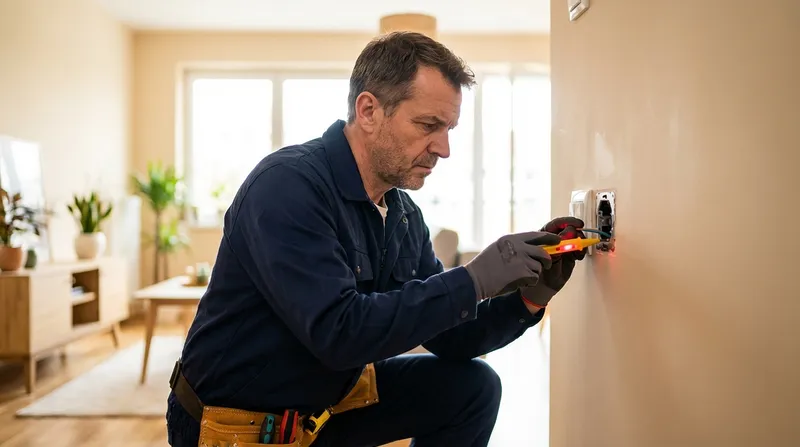
Rule of thumb: anything involving electricity (above 25 volts), gas, or drinking water systems belongs in the hands of a qualified tradesperson. Not just for safety reasons, but legally too — many insurance policies do not cover damage from amateur work on these installations. Everything else you can basically do yourself, given a minimum of tools and time.
A sensible orientation:
Clearly DIY-friendly:
Better to call a professional:
The line is not arbitrary. For electrical work, 50 percent of former DIYers now prefer to hire professionals, for plumbing even 64 percent. The reason: one real water damage incident, and the DIY mentality evaporates fast.
Note for tenants: Even if you wanted to repair yourself — for many works on rental installations, the landlord is responsible. More on that below.
Hourly rates have risen significantly in recent years. Current industry data for 2026 paints the following picture:
| Trade | Hourly rate (net) | Typical small repairs |
|---|---|---|
| Painter | €45-65 | Wall painting, wallpapering |
| Carpenter | €55-75 | Doors, furniture, built-ins |
| Electrician | €55-85 | Socket, switch, lamp |
| Plumber (HVAC) | €60-90 | Heating, bath, kitchen |
| Plumber (water) | €75-130 | Water line, drain |
| Roofer | €65-95 | Roof, gutter, insulation |
On top is a travel flat fee of €15 to €50 per job, sometimes also arrival and return travel time as regular work time. In big cities like Munich, Frankfurt or Hamburg, prices are 15 to 25 percent above the national average. If the tradesperson brings material, a markup of 10 to 30 percent on the purchase price applies — this is standard and covers logistics and warranty.
A typical small repair — faucet change with your own material — takes about 45 minutes with an installer. Plus arrival plus billing, you end up at one hour and thus €90 to €130. Even if you only have the washer replaced, you pay similar, because the minimum billing time is usually one hour.
If you live in a rental, the payment question is legally regulated. According to the minor repairs clause under standard German case law, the tenant must pay for certain very small repairs — but only under strict conditions:
Practically that means: if the faucet drips, you report this in writing to the landlord. They commission the tradesperson, pay the bill, then ask you to cover the costs — but only if all four conditions are met and the clause in your rental contract is valid. For larger damages (broken boiler, clogged drain, burst water pipe), the landlord always pays.
Important: Per Stiftung Warentest, many small-repair clauses in older rental contracts are invalid. In doubt, a legal review pays off — often you as tenant don't have to pay anything, even if the contract says otherwise.
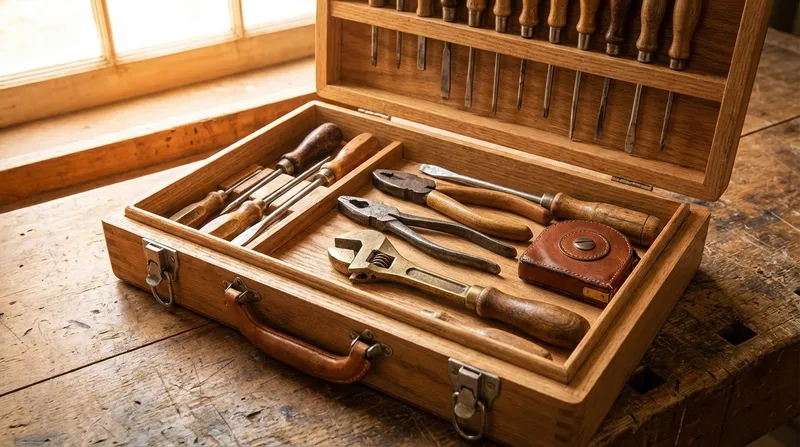
These five classics can be done by almost anyone with some patience. You need a basic toolbox (screwdrivers, pliers, water-pump pliers, Allen key set) and a quiet hour.
The timings assume all tools and materials are at hand. If you need to shop first, add 45 minutes plus €5 to €20 in travel and opportunity costs.
There are situations where any minute of self-attempt is one minute too many. The clear professional cases:
In emergencies, a good insurance (home content, liability, building) has a fixed partner tradesperson who comes within hours. Many people forget they already pay for this service — check your policies before the panic call.
On Helpful Folks you can find reliable tradespeople in your region with reviews from other customers — that makes emergency search much more efficient than calling three different craft businesses.

For larger jobs, the type of price agreement decides whether you end up paying more than planned:
The proven tactic for repairs over €200: obtain at least two written quotes and insist on a fixed price. A reputable tradesperson usually creates the estimate free of charge (unless an extensive inspection with measurements is needed). Have that confirmed in advance — a binding price with service list protects you from surprises.
Repairs in your own household count as tradesperson services under § 35a EStG and are tax-favoured. You can deduct 20 percent of the labour costs directly from your tax liability, up to a maximum of €1,200 per year. The calculation basis is €6,000 in labour costs.
Three conditions for the tax benefit:
This really pays off: a small repair of €150 (of which €100 is labour) brings you €20 back. For a larger repair of €1,500 in labour, you land at €300 refund — not a negligible item at year end.
Finding tradespeople is a sore point for many. Recommendations from friends or neighbours are gold, but not always available. With new providers, watch for:
One last tip: don't compare pure hourly rates. A tradesperson at €85/hour who completes work in one hour is cheaper than one at €65/hour who needs two. Reputable tradespeople provide a realistic time estimate in the quote — and stick to it.
Small household repairs are an eternal topic — and with some planning, no reason to panic. Those who know the basic rules — electricity and water to the pro, simple mechanics yourself — save time and nerves. For tradesperson services, the typical hourly rate in 2026 is €45 to €130 depending on trade, with a 20 percent tax deduction at year end. Tenants should know they don't have to pay for every repair, and their landlord must commission the tradesperson. On Helpful Folks you find vetted tradespeople for all common small repairs — with reviews and transparent pricing. Register for free and find the right expert.
Helpful Folks connects you with verified service providers — free and hassle-free.