
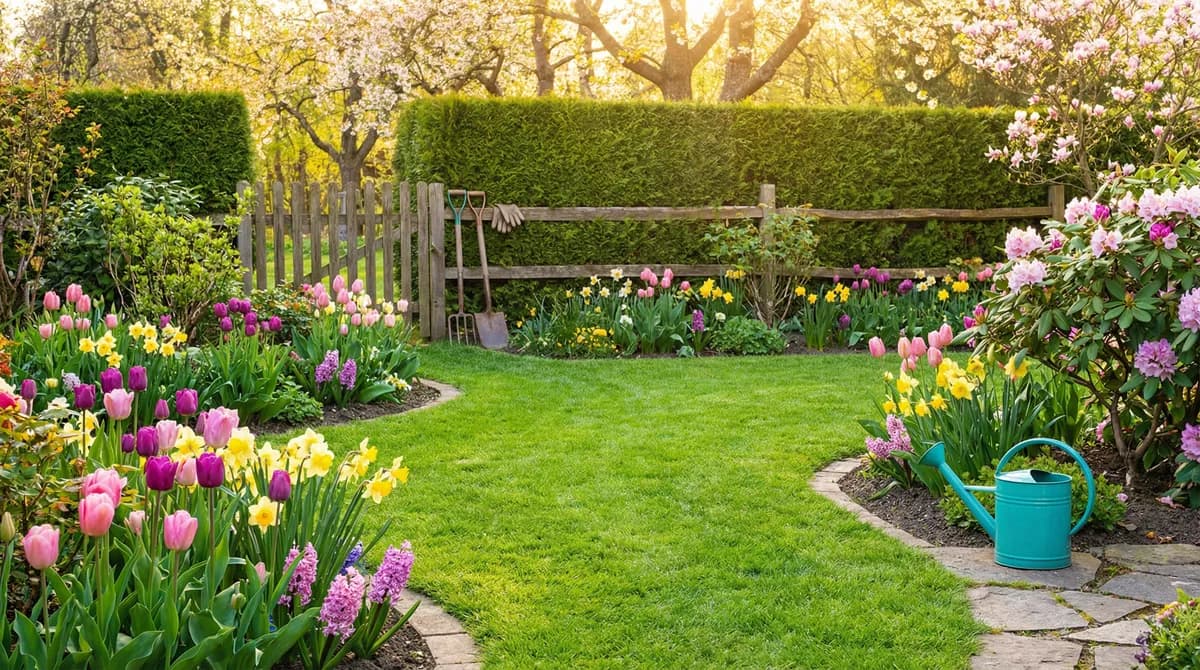
Get your garden spring-ready: lawn care, bed preparation, hedge trimming, terrace cleaning. Tips, costs and legal rules for 2026.
Helpful Folks Redaktion
Experts in Garden Care and Outdoor Maintenance
March 26, 2026
When the days grow longer and the first crocuses push through the soil, garden owners feel the irresistible urge to get outside. Spring is the most important season for your garden — the time when you lay the foundations for healthy, vigorous growth throughout the summer. In this guide, you will learn which tasks need doing when, what the law says about hedge trimming, what a professional gardener costs — and which common mistakes you should avoid at all costs.
After winter, most lawns look the worse for wear — bare patches, moss and thatch are all too common. With the right care in the right order, you can restore a lush green carpet.
The golden rule is: tidy up first, then feed, then scarify, and only then mow. The sequence matters because each step builds on the previous one.
Tidy up (from March). Clear the lawn of fallen leaves, twigs and winter debris. This lets light and air reach the grass once more.
Feed (March to early April). As soon as frost is no longer expected, apply a nitrogen-rich lawn fertiliser. This gives the grass the growth boost it needs after winter dormancy.
Scarify (late April to May). Wait at least two weeks after feeding before scarifying to remove moss and thatch. By then the grass will have enough energy to recover quickly. Set the scarifier so the blades penetrate only about two to three millimetres into the soil.
Overseed and mow. Fill bare patches with grass seed, press lightly and keep moist. For the first mow of the season, do not cut too short — four to five centimetres is ideal as a starting height.
Tip: Only ever scarify dry grass and work in straight lines across the lawn. A second pass at right angles gives an especially thorough result but is only necessary when thatch is severe.
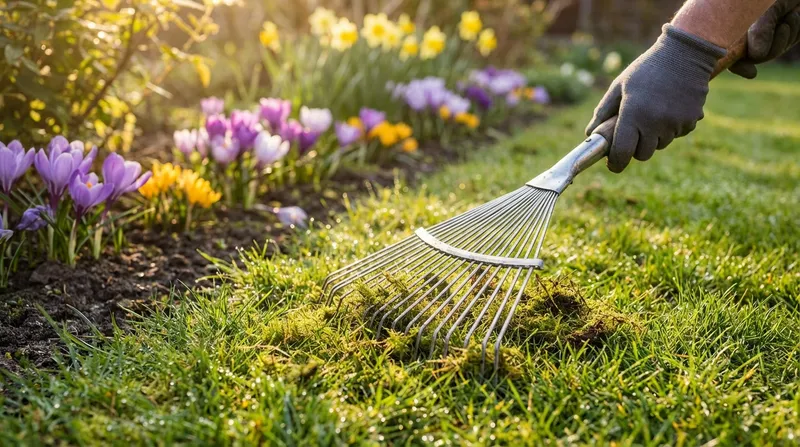
Before the first perennials, summer flowers or vegetables can go into the ground, your beds need thorough preparation. Good soil is half the harvest.
Step 1: Clear up. Remove old leaves, dead plant matter and weeds. Pests and fungal spores can overwinter under decaying foliage — you do not want to carry them into the new gardening year.
Step 2: Loosen the soil — but correctly. Many gardeners instinctively reach for the spade, but in spring you should avoid traditional digging. It disrupts the natural soil layers and brings dormant weed seeds to the surface. Instead, loosen the soil to a depth of about 20 centimetres using a broadfork or a single-tine cultivator, without mixing the layers.
Step 3: Work in compost. Mature compost is the gardener''s gold. Work approximately two to three litres of ripe compost per square metre shallowly into the top layer of soil. It supplies nutrients, improves soil structure and encourages beneficial organisms.
Step 4: Mulch. A thin layer of grass clippings, straw or chopped leaves protects the soil from drying out, suppresses weeds and slowly decomposes into valuable humus. Wait until the soil has warmed sufficiently before mulching — an early mulch layer traps cold in the ground.
If you want to start growing vegetables in spring, a raised bed is an excellent choice. From mid-March, when the soil temperature in the raised bed reaches around seven degrees, you can already sow radishes, cut-and-come-again lettuce, spinach, rocket and peas. A fleece cover over the rows protects against late cold snaps. After the Ice Saints in mid-May, heat-loving vegetables such as tomatoes, peppers and courgettes can follow.

Hedge trimming requires not just gardening skills but also knowledge of the law. The German Federal Nature Conservation Act (§ 39 BNatSchG) sets clear rules:
| Period | Permitted | Prohibited |
|---|---|---|
| 1 October – 28 February | Radical cutting back, clearing, heavy pruning | — |
| 1 March – 30 September | Gentle shaping and maintenance cuts (removing new growth) | Radical cutting back, coppicing |
Why the ban? During the growing season, birds nest in hedges and shrubs. Drastic pruning would destroy active nests and is therefore classified as an administrative offence carrying substantial fines.
What is specifically allowed: You may shape your hedge at any time as long as you only remove the current year''s new growth and do not disturb nesting birds. The ideal time for a thorough shaping cut in spring is mid to late February — just before the closed season begins. From March onwards, only light corrections are permitted.
Practical tip: Before every hedge cut, check whether birds are nesting inside. If so, postpone the trim. Wildlife welfare always takes priority.
Spring is pruning season — and nowhere is timing more critical than with roses and fruit trees. A well-executed cut promotes vigorous growth and abundant flowering.
The reliable signal for rose pruning is the forsythia bloom — depending on location and weather, this falls between mid-March and mid-April. Always cut approximately five millimetres above an outward-facing bud, at a slight upward angle. First remove all dead, diseased and overly thin shoots completely. Shorten healthy shoots to three to five buds, depending on the type of rose.
Pome fruit such as apples and pears is best pruned in late winter between February and March, before the sap begins to rise. During this dormant period, pruning wounds heal fastest and the risk of fungal infection is lowest. Remove inward-growing branches, competing leaders and dead wood to create an open, well-ventilated crown.
Important: Stone fruit such as cherries and plums is better pruned after harvest in summer. A winter cut promotes bacterial canker and other diseases in these species.
Not everyone has the time, tools or expertise to whip the garden into shape themselves. A professional gardener via Helpful Folks can take the work off your hands — from lawn care to tree pruning.
| Service | Cost (2026) | Notes |
|---|---|---|
| Gardener (hourly rate) | €30–60 | Varies by qualification and region |
| Lawn mowing (300 m²) | €40–80 per cut | Including edging on request |
| Hedge trimming | €3–10 per running metre | Depends on height and density |
| Tree pruning | €80–250 per tree | Complex work with ladder/platform costs more |
| Monthly garden maintenance | €150–250 | Regular mowing, weeding, trimming |
Garden care costs are also tax-deductible in Germany as a household-related service — 20 per cent of labour costs, up to a maximum of €4,000 per year. Material costs are excluded.
Starting too early with tender plants? The first warm days in March are tempting, but a late frost can undo weeks of work. Wait until after the Ice Saints in mid-May before planting frost-sensitive species such as tomatoes, dahlias or geraniums. The forsythia bloom is a reliable indicator that temperatures have settled above six to eight degrees.
Watering too much and too often? Many garden owners water small amounts daily — one of the most common errors. It is far better to water less frequently but thoroughly. This encourages roots to grow deep rather than staying near the surface. Permanently wet soil leads to root rot and weakens plants.
Planting too close together? Young plants look small and the bed seems empty. But anyone who ignores recommended spacing will run into trouble by summer: plants compete for light, water and nutrients, air circulation suffers and fungal diseases spread more easily.
Fertilising blindly? More fertiliser does not automatically mean better growth. Over-fertilising damages soil life and makes plants more susceptible to pests. When in doubt, have a soil analysis done and fertilise according to actual need.
Forgetting the hedge trim deadline? Anyone who delays the major cut until March risks fines and harms nesting birds. Plan the hedge trim well before 1 March or restrict yourself to gentle shaping cuts thereafter.

A complete garden spring-clean also includes the terrace. After a long winter, both the floor surface and furniture need a thorough refresh before you can enjoy your first outdoor coffee.
Remove winter protection: Take covers off furniture and planters, remove frost protection from tender perennials and roses. Check all plants for frost damage and cut back any frozen shoots.
Clean the terrace floor: Sweep away coarse dirt and remove moss and algae. For stone surfaces, a mixture of vinegar and water at a 1:10 ratio works well. For wooden decking, scrubbing with a soapy solution of warm water and natural soap is sufficient.
Care for wooden furniture: Clean with a mild soap solution, then apply a care oil or glaze to protect the wood from UV radiation and moisture. Natural soap has a re-fatting effect that preserves the wood''s natural protective layer.
Refresh plastic furniture: Remove dust and dirt with a hand broom, then wipe down with a damp cloth and a little all-purpose cleaner. For yellowing, a paste of baking soda and water can help.
Check cushions and covers: Inspect for mould and damp stains. Wash if necessary or replace. Tip: always store seat cushions dry and well-ventilated over winter.
Lighting and decoration: Clean solar lights and check they work, replant containers and give your outdoor space a fresh start to the new season.
Spring in the garden is a busy but deeply rewarding time. Giving your lawn, beds and woody plants the right care now lays the groundwork for a summer filled with blooms and bountiful harvests. Take the tasks step by step and do not let the long list put you off — even small progress makes a big difference. And if you need a hand, Helpful Folks makes it easy to find experienced garden professionals near you. Browse the listings and start the gardening season stress-free.
Helpful Folks connects you with verified service providers — free and hassle-free.