

Healthy nutrition for dogs and cats: essential nutrients, food types compared, toxic foods and monthly costs. The complete guide for pet owners.
Helpful Folks Redaktion
Experts in Pet Care and Animal Welfare
March 26, 2026
Whether you share your home with a loyal dog or an independent cat, what goes into the food bowl has an enormous impact on your pet''s health, energy and quality of life. But navigating the world of dry food, wet food, BARF and countless brands can feel overwhelming. In this guide, you will learn which nutrients dogs and cats truly need, which type of food suits your pet best, which human foods are dangerous — and what good nutrition costs each month.
Dogs are natural omnivores with a strong preference for animal protein. Their diet should be built on three main nutrient groups: protein, fat and carbohydrates — supplemented by vitamins, minerals and plenty of fresh water.
High-quality protein from meat, fish or eggs forms the foundation of a balanced canine diet. It supplies essential amino acids that the body cannot produce on its own and supports the development of muscles, organs and a shiny coat. In good-quality dog food, the protein content should sit at roughly 35 to 45 per cent.
Fats serve as a concentrated energy source, delivering more than twice as many calories per gram as protein or carbohydrates. They are also indispensable for absorbing fat-soluble vitamins and keeping skin and coat in top condition. A fat content of around five per cent in the daily ration is a useful guideline.
Carbohydrates from potatoes, rice or vegetables round out the meal and provide readily available energy. Although dogs could theoretically survive without carbohydrates, most benefit from a moderate intake — it aids digestion and ensures a steady supply of energy throughout the day.
Important: The precise nutrient requirements vary considerably depending on age, breed, size and activity level. A young, active Border Collie has very different needs from a laid-back senior Pug. When in doubt, a conversation with your vet will help determine the ideal food composition.

While dogs are relatively flexible eaters, cats have very specific requirements. As obligate carnivores — strict meat-eaters — they are fundamentally dependent on animal-derived nutrients. Their entire metabolism is geared towards processing protein and fat, not plant-based food.
Perhaps the most critical distinction involves the amino acid taurine. Whereas most mammals can produce enough taurine on their own, cats have a severely limited ability to do so. They must obtain taurine from their food — every single day. A deficiency can have devastating consequences: from retinal damage leading to blindness to a life-threatening enlargement of the heart muscle.
In the wild, cats solve this problem elegantly: a mouse is eaten whole — muscle meat, organs, bones and blood included. Heart muscle and liver are particularly rich in taurine. In commercially produced cat food, taurine is therefore added as a supplement — always check the ingredients list when buying.
Further feline nutritional quirks:
The question of the best food type has occupied pet owners for decades. In truth, both formats have their merits — and the best solution is often a combination of the two.
| Property | Wet Food | Dry Food |
|---|---|---|
| Water content | 70–80 % | approx. 10 % |
| Energy density | Low — larger portions needed | High — small portions suffice |
| Shelf life | 1–2 days in fridge once opened | Weeks to months at room temperature |
| Palatability | High — strong aroma and flavour | Moderate — some pets are less keen |
| Dental care | No abrasive effect | Slight abrasion may reduce plaque |
| Daily cost | Tends to be higher | Tends to be lower |
| Hydration | Excellent — especially important for cats | Low — additional drinking water essential |
For cats, many veterinarians recommend a high proportion of wet food, since cats naturally drink very little and cover much of their fluid needs through their meals. Insufficient water intake can lead to kidney problems in the long term — one of the most common health issues in older cats.
For dogs, mixed feeding often works best: wet food as a tasty main meal, supplemented by dry food as a snack or second meal. This way your dog benefits from the advantages of both types.

BARF — short for "Biologically Appropriate Raw Food" — has been a growing trend for years. The idea is to feed dogs and cats the way their wild ancestors ate: raw meat, bones, offal and a little vegetable matter. Proponents report shinier coats, better dental health and increased vitality.
However, raw feeding also carries significant risks, as highlighted by the German Federal Veterinary Association:
Pathogens in raw meat. Salmonella, Campylobacter and parasites such as roundworms or tapeworms can be transmitted to dogs, cats — and through their excretions to humans as well.
Raw pork is strictly off-limits. It can carry the Aujeszky''s disease virus, a herpes virus that is invariably fatal for dogs and cats. Pork must never be fed raw.
Nutrient imbalances are common. Anyone assembling BARF rations themselves risks under- or over-supplying essential nutrients. The calcium-to-phosphorus ratio is particularly easy to get wrong — in puppies this can lead to skeletal deformities, in cats to kidney damage.
Thyroid issues from throat meat. Cheap head or throat meat can contain thyroid tissue, and regular feeding may disrupt your pet''s thyroid function.
If you still want to try BARF, seek veterinary advice beforehand and have the rations professionally calculated. Ready-made BARF menus from specialist suppliers are a safer alternative to DIY compositions, as they are already nutritionally balanced.
Many foods that are perfectly safe for humans can be dangerous or even fatal for dogs and cats. Every pet owner should know this list:
In an emergency: If your pet has eaten any of these foods, contact your vet or the nearest animal hospital immediately. Every minute counts in cases of poisoning.
Food is one of the biggest ongoing expenses for pet owners. How much you should budget depends primarily on your pet''s size and the quality of food you choose.
| Dog Size | Example Breeds | Budget Food | Premium Food |
|---|---|---|---|
| Small (up to 10 kg) | Chihuahua, Pug | €15–30 | €30–50 |
| Medium (10–25 kg) | Beagle, Cocker Spaniel | €30–60 | €50–100 |
| Large (25–45 kg) | Labrador, German Shepherd | €50–80 | €80–150 |
| Very large (over 45 kg) | Bernese Mountain Dog, Great Dane | €70–120 | €120–200 |
For an average house cat weighing four to five kilograms, expect to spend between €30 and €60 per month on quality wet food. Dry food is somewhat cheaper but should not be the sole food source for cats. BARF rations typically run to €40 to €80 per month depending on composition.
Add treats on top, which can easily account for another €5 to €15 per month — and should not be forgotten in the calorie calculation. As a rule of thumb, treats should make up no more than ten per cent of the daily calorie intake.
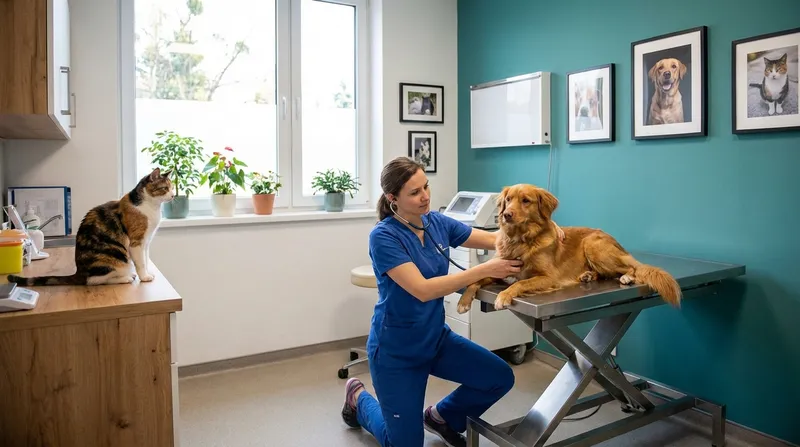
Obesity is just as widespread in pets as it is in humans — and just as harmful. Excess weight puts strain on joints, heart and metabolism, and measurably shortens life expectancy. The good news is that a few simple checks will help you spot the problem early.
The rib test: Run your hand along your dog''s or cat''s ribcage with light pressure. The ribs should be clearly palpable beneath a thin layer of fat. If you have to press hard to feel them, your pet is likely overweight.
The waist check: Look at your pet from above. Behind the ribcage, there should be a visible narrowing towards the hips — the waist. If this is missing, it points to excess weight.
Fat deposits in the lumbar area: Particularly in cats, noticeable fat pads develop along the spine and belly when they are overweight.
What to do about excess weight:
Holidays, business trips or a long day at the office — there are many situations where you simply cannot handle feeding yourself. This is exactly where professional pet care comes in.
A good pet sitter does not just fill the bowl but also pays attention to the correct portion size, sticks to the established feeding schedule and can handle special diets or medication administration when needed. This is particularly important if your pet has food allergies or a condition that requires an adapted diet.
The cost of a pet sitter in Germany averages between €10 and €15 per hour. A feeding visit — including a short play session and cleaning the litter tray — typically costs €10 to €20 per visit. On Helpful Folks you can find pet care near you with people who understand the specifics of pet nutrition and will feed reliably according to your instructions.
The right nutrition is the foundation of a long, healthy and happy life for your pet. Whether you opt for premium commercial food, mixed feeding or BARF — what matters is that the nutrients are right and you take your pet''s individual needs into account. And when you cannot be there to feed your companion yourself, Helpful Folks helps you find experienced pet care quickly and easily. Browse the listings — so your four-legged friend is always well looked after, even in your absence.
Helpful Folks connects you with verified service providers — free and hassle-free.