
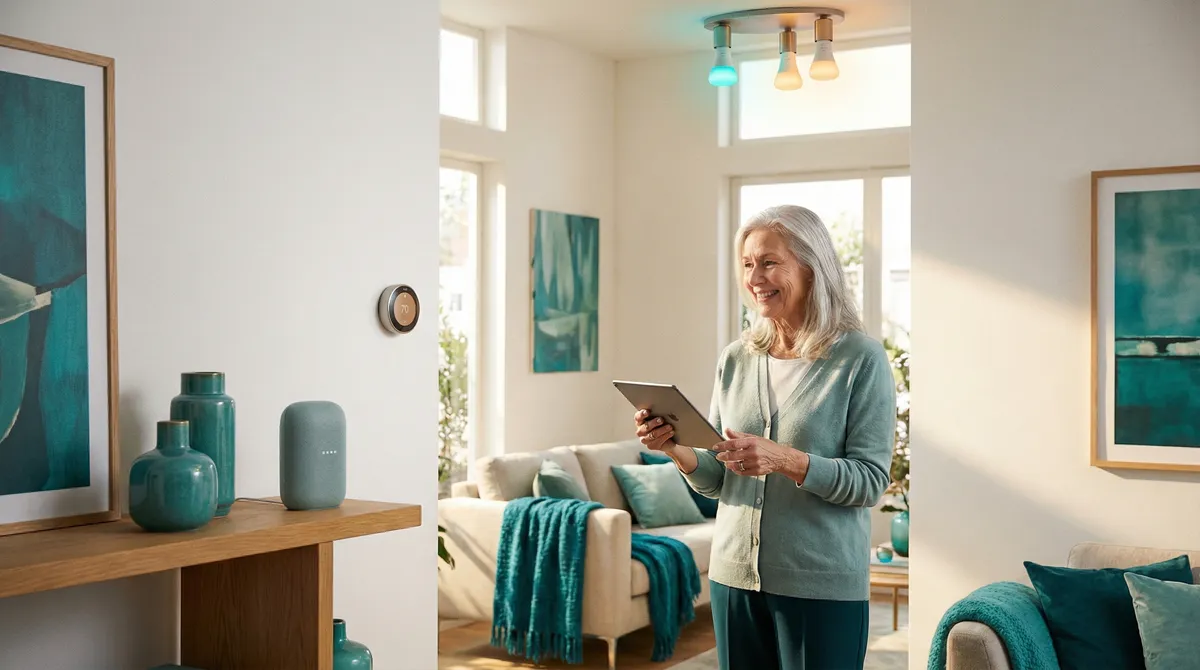
Smart home setup help: what tech assistance costs, which devices are worth it, nursing care subsidies up to 4,180 euros and tax benefits.
Helpful Folks Redaktion
Experts in Tech Help and Digital Living
March 28, 2026
Smart thermostats, voice assistants, automatic lighting — the technology sounds tempting, but many people already struggle with the setup. Incomprehensible manuals, different wireless standards and the question of which devices actually work together turn the entry into a test of patience. The good news is that you do not have to do it alone. In this guide, you will learn who can help you with your smart home setup, what the support costs, which subsidies are available — and how the right devices can even cut your heating bills.
The idea is simple: dim the lights by voice command, regulate the heating or monitor the front door. In practice, however, things often look very different. The most common hurdles are not the devices themselves but getting them to work together.
The core problem is that there is no single universal standard. Some devices communicate via Wi-Fi, others via Zigbee, yet others via Bluetooth or the newer Thread standard. Not all protocols understand each other. The Matter standard, introduced in 2022, aims to solve this chaos in the long term by creating a common language for all major platforms — but implementation is still not complete across the board in 2026.
On top of that, every device needs to be individually configured, added to the app and linked with other devices. For tech-savvy people this is manageable; for many others — particularly older adults — it is genuinely overwhelming. According to a Bitkom survey, seniors in particular want personal support and companions to help them use digital technologies safely.
Tip: Stick to a single ecosystem — choose one main platform (Amazon Alexa, Google Home or Apple HomeKit) and preferably buy devices that natively support it. This significantly reduces compatibility headaches.
You do not need a complete smart home all at once. A step-by-step approach with a few well-chosen devices delivers immediate, tangible benefits — without breaking the bank.
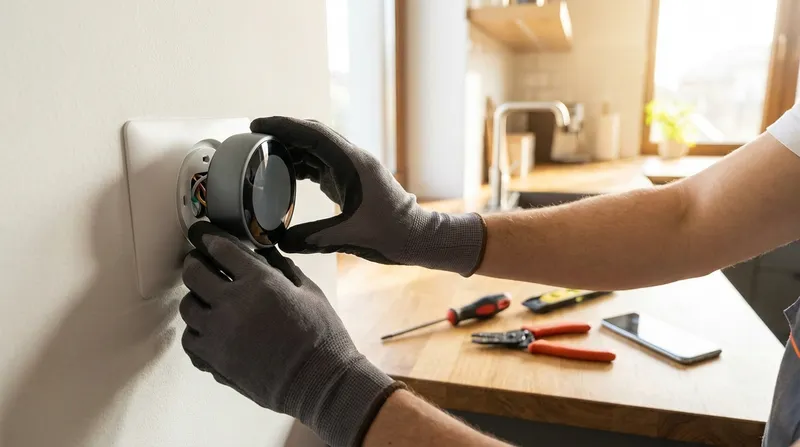
Smart thermostat (from €60). The biggest saving with the least complexity. Smart radiator thermostats like tado° or Homematic IP automatically adjust the temperature to your daily routine. According to the Fraunhofer Institute, they save an average of 15 per cent on heating costs — for a 70-square-metre flat, that can quickly amount to €165 to €300 per year.
Smart lighting (from €15 per bulb). Motion sensors switch lights on and off automatically — ideal for hallways and staircases. Timed lighting can simulate occupancy when you are away, boosting security.
Voice assistant (from €30). An Amazon Echo Dot or Google Nest Mini serves as the central control unit for all compatible devices. Control lights, heating and music by voice — especially practical for people with limited mobility.
Smart plugs (from €10). Make any existing appliance remotely controllable — from fans to standing lamps. Timer functions save electricity on standby devices.
Door and window sensors (from €15). Send push notifications to your phone when a window or door is open — useful for both security and heating efficiency.
A solid starter setup with a thermostat, two smart bulbs and a voice assistant costs around €150 to €250 in total.
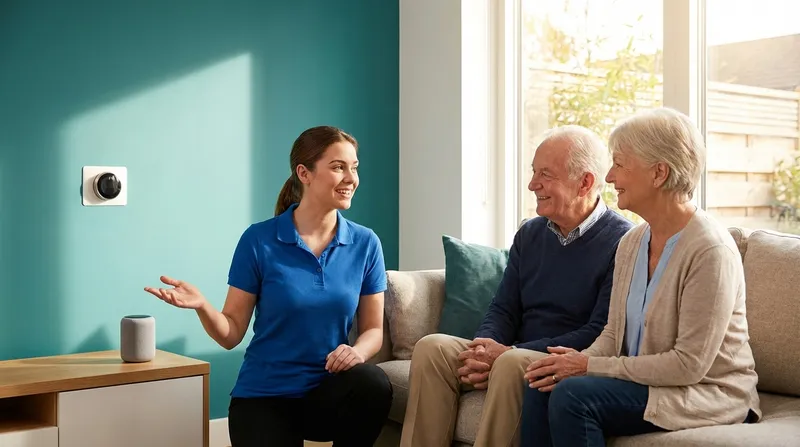
If you do not want to — or cannot — handle the setup yourself, you can find tech help near you on Helpful Folks, from initial advice through to complete installation.
| Service | Cost (2026) | What is included? |
|---|---|---|
| Private tech helper | €25–50/hr | Advice, setup, training |
| Electrician (smart home) | €50–100/hr | Professional installation with warranty |
| Smart home consultant | €80–150 flat rate | Device advice, compatibility check |
| Full installation (company) | €3,000–8,000 | Planning, wiring, programming |
| Simple setup (3–5 devices) | €75–150 | Voice assistant + lights + thermostat |
For most households, a private tech helper for one to two hours is enough to get the basic system running and explain how to use it. A full professional installation with wiring and a KNX system only makes sense for new builds or major renovations.
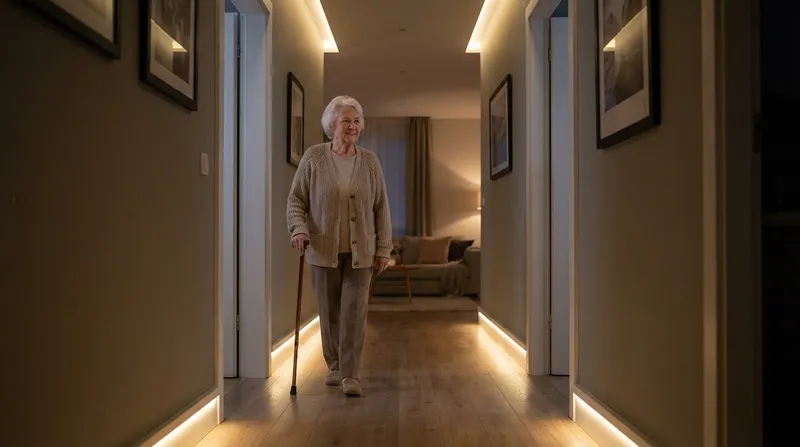
For older adults, a smart home offers far more than just convenience — it can make a decisive contribution to living independently at home for longer. The technical term is Ambient Assisted Living (AAL): assistive technology systems that support daily life and enhance safety.
The key AAL features at a glance:
Fall detection: Fall sensors worn on the belt or wrist detect sudden changes in movement. If the person remains motionless after a fall, the system automatically triggers an emergency call to a monitoring centre or stored contacts.
Automatic lighting: Motion sensors switch on lights in the hallway, bathroom and bedroom at night — eliminating tripping hazards in the dark.
Cooker cut-off: Smart sensors detect when the hob has been left on unattended and switch it off automatically after a set time.
Door monitoring: Smart doorbells with cameras show on a tablet or smartphone who is at the door — without having to get up.
Reminder functions: Voice assistants remind users to take medication, keep appointments or drink water — particularly valuable for seniors living alone.
The initial setup of these systems is best carried out with a tech-savvy helper who not only installs the devices but also patiently explains how to use them and addresses typical concerns.
The cost of a smart home setup can be reduced in several ways — many funding options are surprisingly little known.
Anyone with a recognised care level (from care level 1 upwards) can apply to their nursing care fund for a grant towards home environment improvement measures. This includes technical aids such as fall detectors, emergency call systems and automatic lighting. The grant amounts to up to €4,180 per measure. The nursing care fund must decide on the application within three weeks — if the deadline passes without a stated reason, the benefit is deemed approved.
The installation of a smart home system by a specialist company counts as a skilled trade service under § 35a EStG. You can claim 20 per cent of the labour costs against tax — up to a maximum of €1,200 per year. The materials themselves are not deductible, but assembly and setup are. Requirement: an invoice and payment by bank transfer.
Additionally, if you hire a private tech helper for device setup and training, this falls under household-related services — here, up to €4,000 in labour costs per year are deductible (20 per cent = max. €800 tax saving).
A connected home also means a larger attack surface for hackers and potential privacy risks. The German Federal Office for Information Security (BSI) recommends the following ground rules:
A good tech helper does not just set up the devices but also configures security settings and explains what to watch out for in everyday use.
A smart home is not just about convenience — it can pay for itself through energy savings within just a few years. Smart thermostats and intelligent roller shutter controls in particular deliver a quick return.
How does the maths work? With an average gas bill of €1,200 per year and a saving of 15 per cent through smart thermostats, you save around €180 annually. Four smart radiator thermostats cost approximately €200 to €300 — so the investment pays for itself after two heating seasons at most.
Even greater savings in combination? If you combine smart thermostats with automated roller shutters and window contact sensors, studies from the Fraunhofer Institute suggest savings of up to 40 per cent are possible. Window contacts detect when a window is opened for ventilation and automatically turn down the heating — a simple measure with a big impact.
Saving electricity: Smart plugs switch standby devices off completely. In an average household, standby devices cost around €100 per year — a problem that smart plugs costing just a few euros each can solve.
Smart home does not have to be complicated or expensive. With the right devices, competent tech help for the initial setup, and the available subsidies, a connected home becomes accessible to everyone — whether you are a tech-enthusiastic family or a senior who wants to live independently for longer. And if you need support with the setup, Helpful Folks makes it easy to find experienced tech helpers near you. Browse the listings and make your home smart — one step at a time.
Helpful Folks connects you with verified service providers — free and hassle-free.