
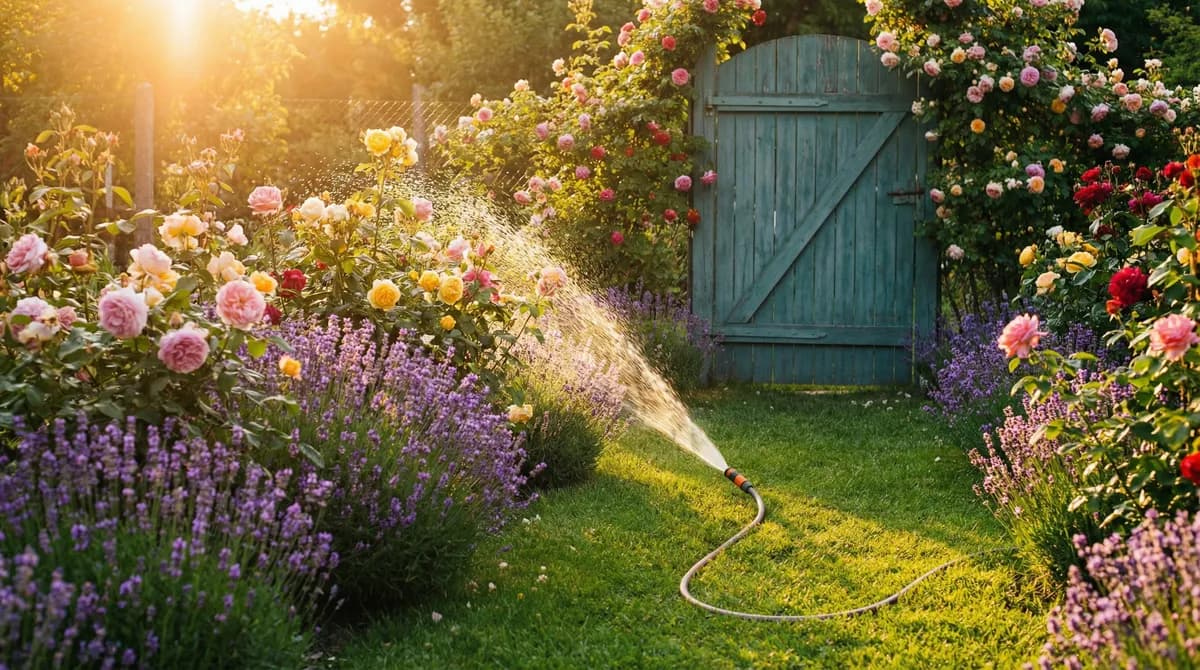
Keep your garden healthy even in extreme heat: The best tips on watering, lawn care, mulching, and biological pest control.
Helpful Folks Redaktion
Experts in Garden Care and Everyday Services
April 7, 2026
As temperatures rise, the most demanding season for your garden begins. Between June and September, it's decided whether your lawn stays lush and green or develops brown patches, whether aphids invade your roses, and whether your flower beds survive the heat. The good news: with the right measures at the right time, your garden can stay healthy and well-maintained even at 35 degrees in the shade. In this guide, you'll learn everything about watering, lawn care, and biological pest control — and when it's worth calling in professional help.
The lawn is the largest area in most gardens — and the most vulnerable to heat stress. Brown patches, thinning grass, and bare spots are typical consequences of a hot summer. But with the right care, you can effectively prevent these problems.
The most important factor is cutting height. In summer, your lawn should be at least four to five centimetres tall — during extreme heat, even six to seven centimetres. Longer blades shade the soil, reduce evaporation, and give the turf more resilience. Make sure to cut no more than one-third of the blade length per mowing session. Cutting too short during heat is one of the most common mistakes and can cause lasting damage to your lawn.
Tip: During heat waves, mow your lawn in the evening when temperatures drop. This gives the grass overnight to recover before the next midday sun hits.
Many garden owners underestimate the importance of summer fertilising. A potassium-rich slow-release fertiliser strengthens the cell walls of the grass and improves its water balance. Potassium helps the lawn cope with less water — a crucial advantage during dry spells. Ideally, fertilise on overcast days or in the evening and water thoroughly afterwards.
If your lawn already has brown spots, rest is the best remedy. Walk on the affected areas as little as possible, as every step puts additional stress on the already strained turf. Start with regular, deep watering — once or twice a week with 15 to 20 litres per square metre. If nothing improves after two to three weeks, remove the dead grass, loosen the soil, and reseed with heat-resistant varieties like tall fescue.
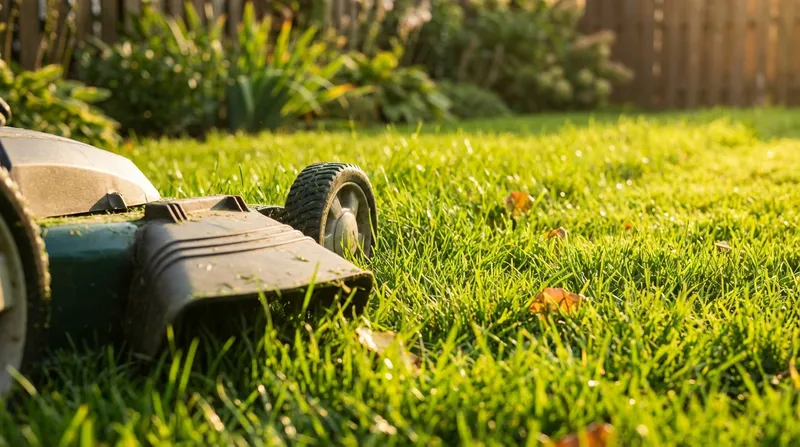
Water is the most important resource in the garden during summer. But incorrect watering often causes more damage than not watering at all. Follow these five rules to get it right:
Water in the morning, not at midday. The best time to water is between 5 and 8 a.m. The water can seep into the cool soil before the sun evaporates it. Watering at midday wastes up to 50 per cent of the water through evaporation — and risks burning leaves through the magnifying glass effect of water droplets.
Less often, but deeply. Daily surface watering trains roots to grow shallow. Better: water deeply two to three times per week. For lawns, that means 20 to 25 litres per square metre; for beds, 10 to 15 litres.
Water close to the roots. Deliver water directly to the root zone, not over the leaves from above. Root-level watering is the most effective method according to NABU and saves significant amounts of water.
Take watering breaks. The soil cannot absorb large quantities of water instantly. Ideal approach: water, pause for 30 minutes, then water again. This allows the water to penetrate deeply rather than running off the surface.
Use rainwater. A rain barrel or cistern not only saves money but also provides softer, temperature-adjusted water — plants tolerate this better than cold tap water.
If you don't want to walk through the garden with a watering can every day, invest in an automatic irrigation system. Here's an overview of the most common options:
| System | Cost (approx.) | Water Efficiency | Ideal For |
|---|---|---|---|
| Drip hose | 60–120 € for 20–30 plants | Very high (up to 70% savings) | Beds, hedges, vegetable gardens |
| Sprinkler system | 200–500 € for 100 m² | Medium | Lawns |
| Pop-up sprinklers | 500–800 € for 100 m² | High | Large lawns |
| Smart irrigation | from 150 € (add-on module) | Very high | All garden types |
Drip irrigation is the most economical option and can save up to 70 per cent of water compared to conventional watering. For lawns, sprinklers or pop-up sprinklers are the better choice as they distribute water evenly across the area.
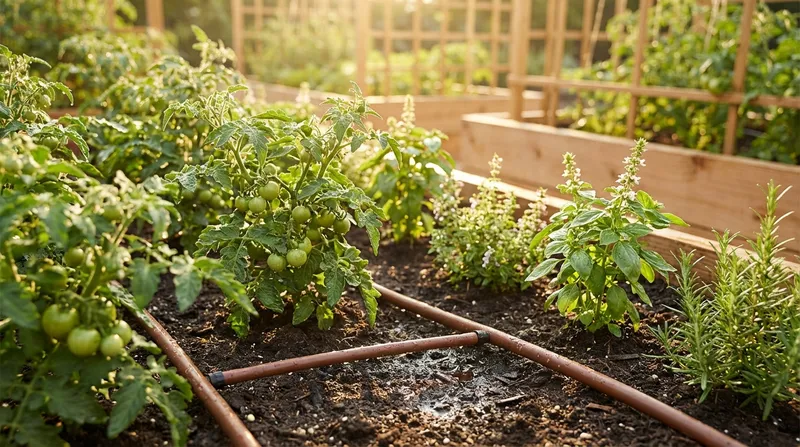
Summer is peak season for garden pests. Aphids, slugs, whiteflies, and fungal diseases can devastate entire beds within days. Before reaching for chemical pesticides, try these biological methods — they're more effective than many people think and protect beneficial insects, soil, and groundwater.
Against Aphids:
Against Slugs:
Against Fungal Diseases:
It's not just the lawn that suffers from summer heat — your beds also need special protection. With the right preparation, even sensitive perennials and vegetable plants can withstand temperatures above 30 degrees without lasting damage.
The most important measure is mulching. A five to ten centimetre thick layer of bark mulch, straw, or grass clippings on beds acts like an insulating layer: it protects the soil from extreme heat and UV radiation, reduces evaporation by up to 50 per cent, and suppresses weeds at the same time. When mulching, leave a small gap around the plant stem to prevent rot.
If you want less work with summer maintenance in the long run, choose plants that naturally cope with heat and drought. Mediterranean herbs like lavender, rosemary, and thyme are the classics — they thrive in the heat. Sedum, coneflower, and yarrow are also rewarding perennials for sunny, dry locations.
For the vegetable garden, there are also heat-resistant varieties: tomatoes, peppers, and aubergines originally come from warm regions and handle high temperatures well, as long as they receive enough water.
During extreme heat waves, shade netting or garden fleece stretched over sensitive crops can help. Lettuce, kohlrabi, and freshly planted seedlings particularly benefit from temporary shading during the hottest midday hours.
If you're looking for support with garden maintenance, you'll find experienced helpers near you on Helpful Folks.
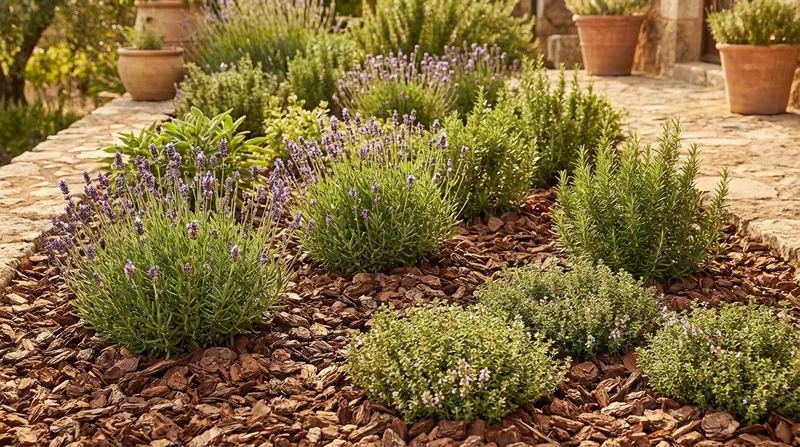
When it comes to pruning trees and hedges in summer, there's an important legal restriction that many garden owners aren't aware of:
Can I trim my hedge in summer? Yes and no. According to Germany's Federal Nature Conservation Act (§ 39 BNatSchG), radical pruning of hedges, shrubs, and woody plants is prohibited from 1 March to 30 September. The reason: bird protection during the breeding season. Only gentle shaping and maintenance cuts that remove no more than the annual growth are allowed during this period.
What happens if you break the rules? Fines of up to 10,000 euros — depending on the federal state and severity of the intervention. Before pruning, always check whether birds are nesting in the hedge.
How do I properly care for trees in summer? Trees also need extra water during heat waves — especially young trees that haven't yet developed deep root systems. As a rule of thumb: water once a week with 50 to 100 litres slowly at the base of the trunk. A watering ring or tree watering bag that releases water evenly over several hours works best.
When is the best time for a shaping cut? The ideal time for summer hedge trimming is late June, after St. John's Day (24 June). By this point, most shrubs have completed their first growth spurt, and a trim encourages fresh new growth. A second light trim can follow in late August.
Not everyone has the time or equipment to keep their garden in top shape during summer. Professional garden help is more affordable than many think — and tax-deductible as a household-related service.
| Service | Cost per Hour | Typical Duration |
|---|---|---|
| Lawn mowing | 30–45 € | 1–2 hrs (depending on area) |
| Hedge trimming | 35–55 € | 2–4 hrs |
| Irrigation installation | 45–65 € | 3–6 hrs |
| Bed maintenance and weeding | 30–40 € | 2–3 hrs |
| Tree pruning | 50–100 € | 1–4 hrs |
| Pest control | 40–60 € | 1–2 hrs |
Prices vary regionally by 30 to 40 per cent — in major cities, you'll generally pay 15 to 30 per cent more than in rural areas. A regular maintenance contract saves up to 30 per cent compared to one-off jobs and costs an average of 0.18 to 0.30 euros per square metre per month.
Good to know: Private garden help through platforms like Helpful Folks is often significantly cheaper than a professional landscaping company. You'll find experienced helpers here who work flexibly and at fair hourly rates. Register for free now and find garden helpers near you.
A well-maintained summer garden isn't a matter of luck — it's the result of the right measures at the right time. Mow higher, water in the morning, mulch, and rely on biological pest control — these are the four pillars of a healthy garden even in extreme heat. And when time is short, professional support is worth it: on Helpful Folks you'll find garden helpers near you who can reliably and affordably assist with summer maintenance.
Helpful Folks connects you with verified service providers — free and hassle-free.